
 Precision Store
 Buy On Amazon
O₂ Lounge™
Pressurized Oxygen Wellness, Designed for Modern Recovery
Hyperbaric Oxygen Chamber is a premium pressurized oxygen system designed to increase the amount of oxygen dissolved in the blood and body fluids in a controlled chamber environment. Built for modern wellness, recovery, and performance routines, it combines a refined chamber design with guided pressure control, integrated oxygen delivery, and user-focused comfort features for calm, efficient sessions.
Available in:
Feel the Difference. See the Results.
Hyperbaric Oxygen Chamber is a next-generation pressurized oxygen system built for users who want more than passive oxygen exposure. Rather than relying on ambient breathing alone, it creates a sealed, pressurized environment that helps increase oxygen dissolved in plasma and body fluids, supporting broader oxygen diffusion into tissues. This is the core principle behind hyperbaric oxygen therapy and the reason it continues to attract attention across wellness, recovery, performance, and regenerative-health discussions.
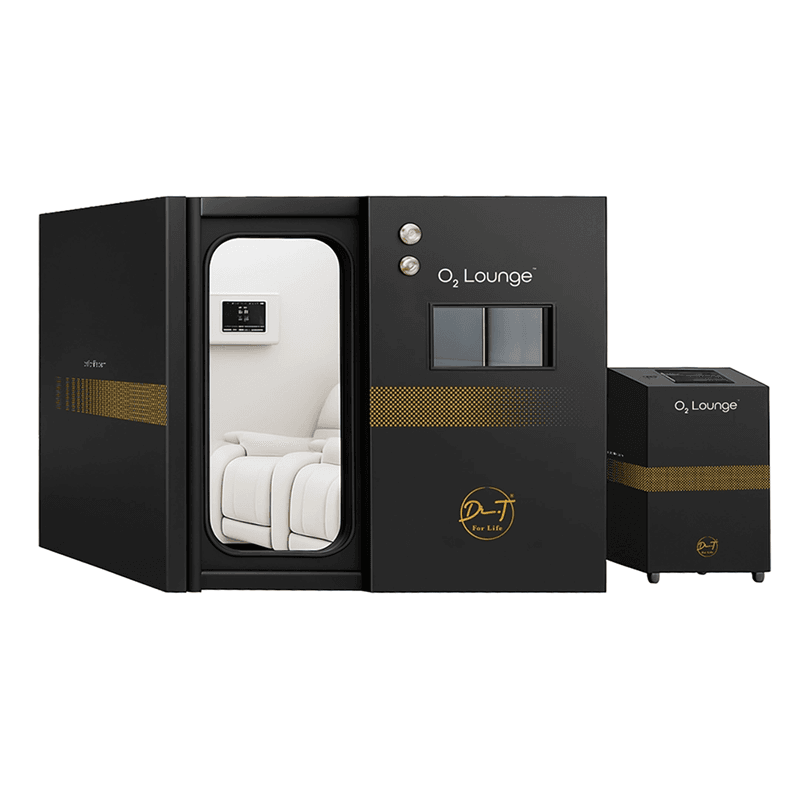
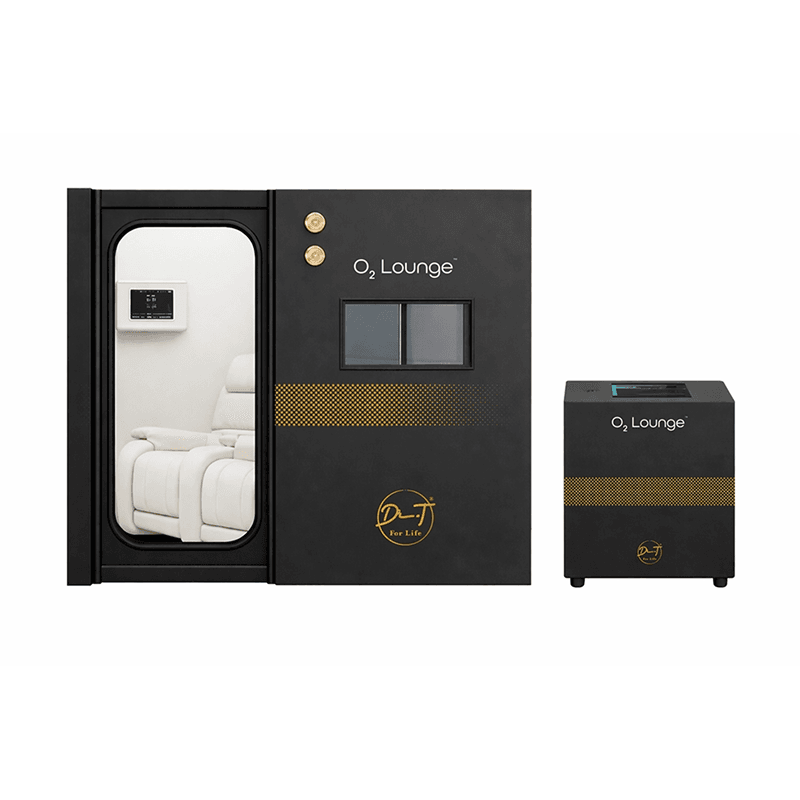
What makes this chamber compelling is the combination of mechanism + comfort + usability. The chamber itself is designed as a spacious, premium unit with an observation window, lounge-style seating, intercom, touchscreen controls, and integrated oxygen delivery. That means the experience is not only functional, but also approachable for repeated use in high-end wellness settings or premium private environments.
From a positioning standpoint, this product is strongest when framed around oxygen delivery, recovery support, circulation support, relaxation, and performance readiness. The scientific material you shared supports mechanistic themes such as angiogenesis, inflammation modulation, antioxidant activity, and mitochondrial support, while the athlete and stroke studies suggest HBOT may have broader performance and neurologic relevance in specific research settings.
Key Benefits
More Oxygen, Delivered Under Pressure
HBOT works by increasing the amount of oxygen dissolved in plasma under pressurized conditions, which helps improve oxygen diffusion and tissue oxygen availability.
Supports Recovery and Reduced Fatigue
Your manual and supporting materials repeatedly associate HBOT with faster recovery support, reduced fatigue, and post-exertion restoration.
Supports Circulation and Vascular Response
The scientific review you shared describes HBOT as being linked to angiogenesis-related pathways and vascular-support mechanisms, including HIF-1, VEGF, and stem-cell mobilization signals.
May Support Performance Capacity
The athlete studies you uploaded suggest improvements in VO2max, anaerobic threshold, mitochondrial respiration, and cardiovascular endurance under specific HBOT protocols.
Premium In-Chamber Experience
With lounge seating, touchscreen controls, intercom, and a spacious hard-shell format, the chamber is built to feel elevated rather than purely technical.
Designed for Repeatable Use
The operating workflow centers around setting pressure and therapy time, entering the chamber, and completing a guided pressurization / decompression process, making repeat sessions more structured and consistent.
Designed For
Hyperbaric Oxygen Chamber is best positioned for:
- Wellness and longevity-focused users building structured oxygen routines
- Athletes and active individuals seeking recovery and performance support
- Executive wellness, premium health clubs, and performance studios
- High-end clinics and wellness centers offering advanced recovery services
- Discerning private users looking for a premium in-home chamber experience
This positioning aligns better with your materials than leading with disease-treatment language.
Use For
Use this section in a wellness-safe way:
- Post-workout recovery routines
- Fatigue-reduction and reset sessions
- Circulation- and oxygenation-focused wellness routines
- Relaxation and guided recovery sessions
- High-performance preparation and recovery support
- Resilience and general wellness optimization
These uses stay aligned with the manual’s recovery-oriented framing and the broader mechanism/evidence set without overcommitting to disease claims on the main product page.
| Device Type | Pressurized hyperbaric oxygen chamber |
| Model | WD1700 |
| Material | Q345R pressure vessel steel + interior soft finish |
| External Dimensions | 2000 × 1700 × 1800 mm |
| Door Dimensions | 650 × 1500 mm |
| Internal Dimensions | 1950 × 1670 × 1650 mm |
| Interior Features | Sofa, oxygen terminal, nasal cannula, intercom, touchscreen |
| Working Pressure | 100–150 kPa / 1–1.5 ATA |
| Ambient Oxygen Concentration | ≤30% |
| Noise Level | <50 dB |
| Internal Temperature | Ambient +3°C to +5°C |
| Safety Features | Manual / automatic safety valves, solenoid valve, observation window, decompression system |
| Footprint | 3.4 m² |
| Weight | 840 kg |
| Weight per m² | 247 kg/m² |
| Oxygen Generation Unit Model | MAF90-15F |
| Host Unit Dimensions | 550 × 510 × 970 mm |
| Control System | UI touchscreen system |
| Power Supply | AC220V / 50Hz |
| Power Consumption | 900W |
| Max Air Flow | 180 L/min |
| Min Air Flow | 75 L/min |
| Oxygen Output Pressure | 150 kPa |
| Oxygen Generation | Imported molecular sieve |
| Compressor | Oil-free compressor air delivery system |
| Oxygen Purity | 95% ±3% |
1) What is a hyperbaric oxygen chamber?
A hyperbaric oxygen chamber is a pressurized environment designed to increase oxygen availability in the body by combining elevated atmospheric pressure with oxygen delivery.
2) How does it work?
The chamber is sealed and pressurized, and the increase in pressure helps raise the amount of oxygen dissolved in blood plasma and body fluids, improving oxygen diffusion into tissues.
3) What pressure range does this chamber use?
Our hyperbaric oxygen chambers are available in three operating pressure levels: 1.5 ATA, 2.0 ATA, and 2.5 ATA (roughly 150 kPa to 250 kPa).
4) What is the oxygen purity?
The oxygen generation system is listed at 95% ±3% oxygen purity.
5) Is the chamber comfortable for repeated sessions?
Yes. The chamber configuration includes a sofa, oxygen terminal, nasal cannula, intercom, observation window, and touchscreen interface to support a more comfortable in-chamber experience.
6) How long is a typical session?
Your materials mention session structures ranging from roughly 30–90 minutes in the manual, while several research protocols use 60–90 minute sessions depending on purpose and protocol.
7) Is it suitable for athletes and performance-focused users?
Yes, that is one of the strongest positioning angles from the material you provided. The athlete studies you shared report improvements in cardiovascular endurance, VO2max, anaerobic threshold, and mitochondrial function under specific HBOT protocols.
8) Are there precautions?
Yes. The manual highlights fire/flammable-item restrictions, ventilation requirements, careful pressurization/decompression, and the need for professional guidance in some situations. It also notes ear-pressure discomfort management during sessions.
9) Are there contraindications or side effects?
The materials you shared note that HBOT is not entirely benign and may involve risks such as barotrauma, claustrophobia, visual effects, and oxygen-toxicity concerns in some contexts.
10) Who is this best for?
Best fit: premium wellness centers, performance and recovery spaces, advanced longevity practices, and private users who want a structured pressurized oxygen experience.
Scientific Backing
Hyperbaric oxygen therapy (HBOT) works by increasing oxygen dissolved in plasma under pressure, which can improve oxygen delivery into tissues beyond what is achieved at normal atmospheric conditions. This is the foundational mechanism behind HBOT and the reason it has continued to be studied across recovery, regeneration, and performance settings.
The scientific material points to several recurring mechanisms: angiogenesis support, inflammation modulation, antioxidant defense, stem-cell mobilization, and mitochondrial effects. HBOT has been associated with enhanced angiogenesis, reduced inflammation, improved antioxidant activity, suppression of cellular senescence pathways, and stimulation of circulating stem-cell activity under appropriate protocols.
On the performance side, research has found improvements in VO2max, oxygen consumption at anaerobic threshold, mitochondrial respiration, and mitochondrial mass markers after structured HBOT sessions, while other performance-focused studies have reported improved cardiovascular endurance.
Condition-specific research in areas such as stroke and acute coronary syndrome is scientifically interesting, but these should not be used as front-page product claims unless supported by the correct regulatory and medical positioning. For the product page, the safest positioning is general wellness, oxygenation, recovery, and performance support.